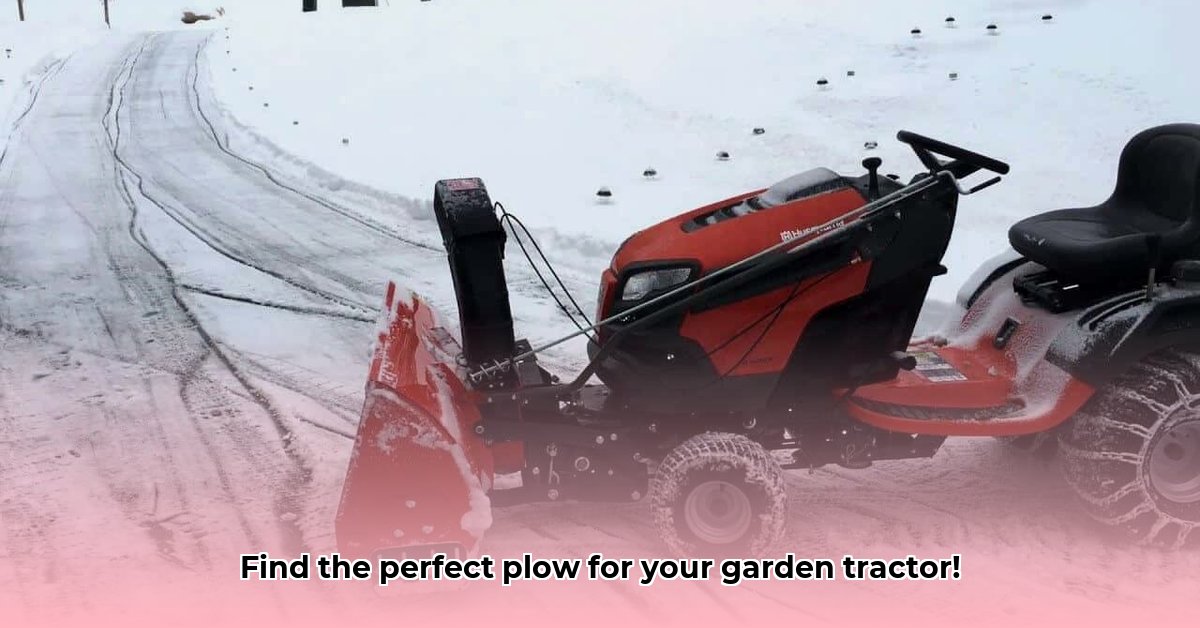
Choosing the right plow for your garden tractor can significantly impact your gardening success. This guide helps you decide between single and double bottom plows, considering factors like your tractor's capabilities, garden size, and soil type. For more information, check out this helpful guide on plow selection.
Understanding Single Bottom Plows: Precision and Control
Single bottom plows are ideal for smaller gardens, intricate plots, or areas with obstacles. Their compact size and superior maneuverability allow for precise tilling and minimize soil disturbance. Think of them as the "scalpel" of the plowing world, offering excellent control, especially on uneven terrain.
Advantages of Single Bottom Plows
- Excellent Maneuverability: Easily navigate tight spaces and around existing plants, minimizing accidental damage.
- Gentle on Soil: Minimizes soil disturbance, preserving soil structure and reducing compaction, particularly beneficial for sensitive soil types.
- Suitable for Smaller Tractors: Requires less horsepower, making them compatible with smaller, lighter garden tractors.
- Ideal for Slopes: Their maneuverability makes them safer and more efficient on sloping land.
Disadvantages of Single Bottom Plows
- Slower Tillage: Covers less ground per pass compared to double bottom plows, resulting in longer tillage times for larger areas.
- Less Efficient for Large Gardens: Not the most efficient option for expansive gardens where speed and coverage are paramount.
Double Bottom Plows: Power and Efficiency for Larger Gardens
Double bottom plows are designed for efficiency in larger gardens. They till twice the area per pass, significantly reducing tillage time. While requiring more power, they are the "bulldozer" of plowing options, ideal for large, open areas.
Advantages of Double Bottom Plows
- High Speed and Efficiency: Covers a large area quickly, saving significant time for larger gardens.
- Maximum Ground Coverage: Significantly increases the area tilled per pass, ideal for covering larger areas efficiently.
- Best for Large Areas: Optimally suited for extensive gardens where time is a crucial factor.
Disadvantages of Double Bottom Plows
- Requires a Powerful Tractor: Demands a more powerful and heavier tractor to handle the increased weight and workload. Using an underpowered tractor can result in damage to both the tractor and the plow.
- Potential Soil Compaction: Improper use or unsuitable soil conditions can lead to increased soil compaction.
- Limited Maneuverability: Less maneuverable than single bottom plows, making them less suitable for smaller gardens, oddly shaped plots, or areas with obstacles. Do you have a lot of rocks or existing plants in your garden? A single bottom plow is better.
Choosing the Right Plow: Key Decision Factors
Selecting the appropriate plow depends on several crucial factors:
Tractor Horsepower: Your tractor must have sufficient horsepower to pull the chosen plow effectively. Consult your tractor's manual to determine the appropriate plow size and weight capacity. Using an underpowered tractor can damage it and the plow. Do you know your tractor's horsepower?
Garden Size: Smaller gardens benefit from the precision of a single bottom plow, whereas larger gardens are more efficiently tilled with a double bottom plow. How many acres do you need to plow?
Soil Type: Heavy clay soils may benefit from the more aggressive tilling of a double bottom plow, while lighter soils may be better suited to the gentler approach of a single bottom plow. Which soil type are you working with (Clay, Sandy, Loam)?
Budget: Double bottom plows typically cost more due to their size and complexity. Before you even look at prices, consider which plow is more appropriate for your needs.
Land Slope: Steeper slopes are best handled by a single bottom plow due to its enhanced maneuverability and improved safety. What is the slope of your garden?
Single vs. Double Bottom Plows: A Summary Comparison
| Feature | Single Bottom Plow | Double Bottom Plow |
|---|---|---|
| Maneuverability | Excellent | Poor |
| Tillage Speed | Slower | Faster |
| Ground Coverage | Less per pass | More per pass |
| Tractor Power Needs | Lower | Higher |
| Ideal Garden Size | Small to Medium | Large |
| Soil Type | Lighter soils, slopes | Heavier soils, flat areas |
Sustainable Tillage Practices: Beyond Plow Selection
While selecting the right plow is vital, sustainable soil management involves more than just the plow itself. Careful field preparation is crucial, such as clearing vegetation to prevent tangling and improve efficiency. Consider alternative tillage methods, such as chisel plowing, to enhance soil health in the long term. Are you considering no-till farming techniques?
Remember, choosing the right plow is a key element of successful gardening. Consult with local agricultural experts or equipment dealers for personalized advice tailored to your specific needs and preferences.